Showing posts with label narrative lectionary. Show all posts

Friday, March 15, 2013

Jericho Jubilations


As we gather for worship at Seneca Presbyterian Church this coming Sunday, the Sunday before Palm Sunday, the Narrative Lectionary text that will greet us is more a triptych than a single painting. Check out Luke 18:31-19:10 and you will find three pericopes (as they are called in seminary) combined into one.
First, Jesus offers his third and final passion prediction to the twelve, namely the disciples who are in his inner circle. It is a prediction full of dire warnings about betrayal, violence, brutality, death – and rising. But the twelve just don’t get it.
          Then Jesus encounters a blind man as he enters the city of Jericho. Mark tells the same story and gives the blind man a name. He is Bartimaeus. The contrast is a bit obvious. The twelve disciples who have traveled with Jesus for three years don’t understand what he is trying to tell them about the events that are about to unfold in Jerusalem. But a blind man hidden in a crowd in the city of Jericho recognizes Jesus and calls out to him: Jesus, Son of David, have mercy on me! Jesus hears him. He brings the crowd to a standstill, and offers Bartimaeus the most amazing gift imaginable: What do you want me to do for you?  “I want to see,” is the answer. And Jesus restores his sight.
The third story is the one you came to know as a child. It’s the story of the short, nimble, very rich, and determined tax collector named Zacchaeus. He’s the one who gets to host Jesus for dinner. It’s a meal that changes his life forever. The very rich tax collector becomes the very generous philanthropist. He gives away half of what he owns and promises to repay fourfold anyone whom he has defrauded.
          When we as faithful seekers to explore these three stories, we found ourselves wondering, questioning, and challenging each other about the people in them.
  • How did the disciples not understand what Jesus was trying to tell them? If they had, what would have been different? Would they have fled far sooner?
  • How could a blind beggar ever know about Jesus? Was his faith based on hearsay and the hope against hope that this One could heal? What was there to lose in the trying? Or in his physical blindness, could he truly recognize the hand of God?
  • Who would Zacchaeus be today? Was he really a crook? Or was he an honest man who happened to be successful? Why did Jesus choose him?
 Where do you find yourself in these stories? Is it with the disciples, the blind man, the rich tax collector, or the crowd? Is it the grumbling, inhibiting, controlling, judging crowd? Or is it the crowd that praises God?
          Let me know what you think. And then join us for worship on this Sunday before Palm Sunday where we will explore some more, and praise God.

Friday, January 18, 2013

Into the Deep


Henry Ossawa Tanner, Miraculous Haul of Fish


As we gather for worship at Seneca Presbyterian Church this Sunday, it will be our turn to enter the story. We have followed the narrative of God’s great story of salvation through the Hebrew Scriptures and into the Gospels. Last week, Jesus entered the scene as we “hit the red letters.” This week, Jesus calls his first disciples, and whenever you see a disciple in any of the Gospels, you need to see us.

I've always loved this story even as I taught it to children in years gone by. We can thank Luke for including the miraculous catch of fish. Matthew and Mark don't. In their versions, Peter and his partners just "drop everything" and follow Jesus. Luke gives us something of a reason why. In Luke's story, we see the unexpected power of life with this One who calls us to follow.  

Once while working with this story for a children's teaching assignment, I was struck by the fact that Peter and those with him almost drown while hauling in that miraculous catch. That fact adds to the wonder of the story. Would you leave everything and follow someone who almost got you killed? It is a marvel, isn’t it? Consider this: Jesus had taken Peter from emptiness to abundance; from empty nets to nets full of fish. Perhaps the awe of the catch along with the power of the preaching were just too irresistible. Perhaps Peter knew that following this One – even if it meant dying - was truly the only way to find life.

When our Wednesday evening study group looked at this text, we were drawn to: "they left everything and followed him." What did that actually mean for Peter and his partners? How much of a risk was it? And if this story is about us, does Jesus ask us to “leave everything” and follow him?

What is Jesus asking us to leave behind? 

  • Our security?
  • Our family?
  • Our identity?
  • Our dreams?
  • Our understanding of how the world works?


And what does He offer in return?

  • A holy calling
  • A new and expanded family
  • A new name: Child of God
  • A vision of God’s kingdom
  • An understanding of the way God’s world works

 Just what do you think?

Friday, January 4, 2013

What Then Shall We Do?

File:El Greco - St. John the Baptist - WGA10548.jpg
El Greco - St. John the Baptist
Ah- the new year has begun! At least for the world, Christmas is over. (In the Church, we finish up our celebration this week with Epiphany Sunday.) Our decorations are packed away; our homes are less cluttered; we have returned to our "normal" routines. We are settling in for the long journey of winter - the season where nature rests and anticipates the new burst of life that is spring. 

From my study window at home, I see the forest bare. In the winter, I can see the tiny bit of lake behind our house that is otherwise hiding from view. Such a perspective reminds me that winter is a good season. It gives us a chance to see more clearly and take stock more deeply.

That may be something of what the Gospel of Luke will do for us this winter. At Seneca Presbyterian Church, we will be "with Luke" until the Sunday after Easter, which this year comes very early; only a few weeks into spring. Luke is a Gospel that doesn't hesitate to "lay bare" the realities of our lives and of our souls. It speaks the truth, but it is a truth spoken in love, so it is a truth we can hear and receive.

We see evidence of Luke's reality in the story of John the Baptist, the story that greets us this week. John is the gatekeeper of all the Gospels. In each one of them, we cannot get to Jesus without passing by John. I find Luke's portrait of John the most fascinating and rich of all. In Luke, John truly does hold center stage. (Just take a moment to read Luke 3:1-22.) We hear his preaching and his dialogue with the crowd. We hear his challenge and his fire. Just like the crowd, we are drawn to him - amazingly so. And just like the crowd, we should be changed by him: honestly confessing and tangibly embodying the reality of our salvation.

What then shall we do? It is the crowd's response to John's preaching. 

As we journey through Luke this winter, with the Narrative Lectionary as our guide, can we can make the crowd's question our springboard? 

  • ·         What does a disciple do? 
  • ·         What does a disciple think and ask? 
  • ·         What does a disciple feel and believe?
  • ·         Who does a disciple turn to? 
  • ·         What does a disciple expect?
  • ·         What does a disciple receive? 
 Our journey through Luke should change us if we listen intently and take what we hear to heart and to life. How? By helping us to see and understand and experience the path of authentic discipleship. John’s message and baptism provide just the beginning to that amazing journey of transformation. Jesus will provide us with the follow up challenge. Let's be ready to hear it. 

I invite you to follow along each week, reading what lies between the Sundays so that in the end, we we have taken the complete journey. A schedule is posted under the Reading Plan tab at the side of the page. For this week, the assignment is simple. Read Luke 3:23-4:13.


Friday, December 14, 2012

A Journey with Luke


Beginning this Sunday, we at Seneca Presbyterian Church will be making a journey through the Gospel According to Luke. The Narrative Lectionary will be guiding us. The journey will take us through Easter. It's an appropriate journey to take on these Sundays. We will remember the life of Jesus in the days between the time we celebrate his birth and the time we remember his death and celebrate his resurrection - his re-birth and our own. On this particular journey, Luke will be our teacher and our guide.

 Each of our Christian Gospels (Matthew, Mark, Luke, and John) is unique and I am deeply grateful for that fact. I find it to be divine endorsement of the diversity of faithful expressions within the one affirmation of faith that all Christians share. Jesus Christ is Lord. He is the divine Incarnation, God with us, present with us on earth and in our lives on earth. In my own limited understanding of all the world's religions, that seems to be the unique contribution of Christianity. The world is not a place we seek to escape; it is the creation of God that humanity has spoiled and God is in the process of redeeming. Those of us who choose to follow His Son and to claim the name Christian are called to be partners with God in that re-creation.

Luke's Gospel was written for a world of both Jews and Gentiles. He wanted to show how the promises of God to Abraham had been fulfilled in the coming of Jesus of Nazareth, the promised Messiah. He claims to be writing an "orderly account" for his friend Theophilus, a name that means “lover of God” (Luke 1:1-4). He anchors his story in the context of world affairs, telling us that “this was the first registration and was taken while Quirinius was governor of Syria” – to quote a familiar yet challenging line from Luke chapter 2.

Each Gospel was written for and in a specific community of Christian disciples. Yet because of their universal appeal, we don’t know just where each of them was written. That is one of the fascinating aspects of Gospel study. As we journey through Luke, we will discover clues about the unique make-up of Luke’s community and their unique challenges and gifts. That fact reminds us that the Gospels are not biographies of Jesus, especially as we understand that literary form. They are, in a sense, extended sermons whose purpose is to tell the Gospel story and bring us to faith, and once we claim that faith, to deeper discipleship.

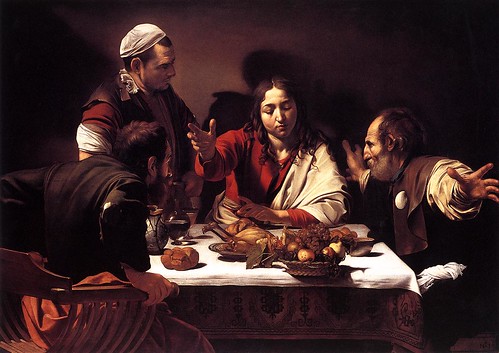
Luke has blessed us with a much –loved Gospel story. Without Luke we would not know Zacchaeus, the Good Samaritan, the Prodigal Son, Elizabeth and Zechariah, Simeon and Anna, and two disciples who walked the road to Emmaus with a stranger who ended up being the resurrected Lord. May that Lord and Savior walk with us as we journey with Luke.

Several years ago, while preaching on the baptism of Jesus as interpreted by Luke, I found that text inviting me into the entire Gospel. If you want to know more about Luke, I've posted that sermon as the page "A Year with Luke." You can access it by clicking on the bar at the side of this page.

I invite you to deepen your own journey by reading the entire Gospel of Luke through from beginning to end, in one sitting if possible. As you do, ponder what it means to be a disciple of the One whose birth we celebrate in these days.

Friday, November 30, 2012

Covert Christians


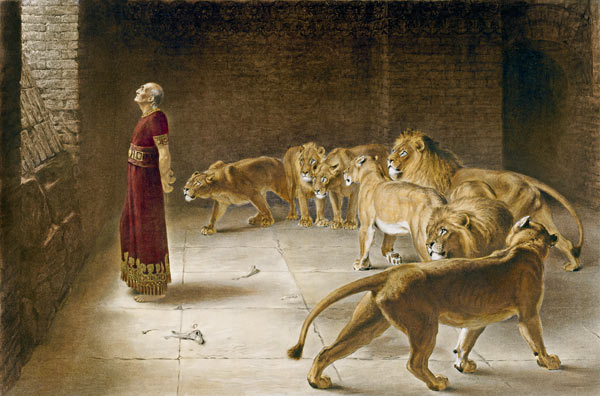
This Sunday at Seneca Presbyterian Church, the Narrative Lectionary will lead us to a consideration of the story of Daniel in the Lions' Den. Now, if you're checking the calendar and noticing that Sunday is December 2, and also checking our church calendar to discover that we are celebrating our annual Christmas Dinner this week, you might wonder what Daniel and lions have to do with Christmas, or better said, with Advent, the season of preparation for Christmas.

 The book of Daniel is all about living in exile. The kingdom of Judah had been destroyed. The very best and brightest of its citizens had been taken into exile by the nation of Babylonia. Everything that gave life meaning had been taken away: land, Temple, and king. The prophets had said it was because of their unfaithfulness. The exile was God's great act of discipline - an act of love that embodies teaching and learning and growing in faith.

Our Hebrew brothers and sisters needed time to figure it all out. They had to learn how to live faithfully in a foreign land. They had to craft ways of worshiping God without the glory of God's Temple and festival celebrations. They had to re-discover their faith.

The wonderful stories that make up the first six chapters of the book of Daniel speak of faithfulness to the ways of God even when those ways seem foolish, and even when they are dangerous. Our heroes - Daniel and his friends Shadrach, Meshach, and Abednego - are wise and faithful and brave. They rise to power without compromising their faith. When threatened by those who are jealous of their success, God protects them even in the face of certain death. And the kings of Babylonia and Persia come to believe in the God of Daniel - the almighty One, the King of all nations.

There are many in our day who believe that Christianity is on its way into "exile" as well. A Gallup Poll released last July says that only 44% of Americans have a great deal or quite a lot of confidence in "the church or organized religion." That rate has been falling steadily in the last thirty years. However you may interpret the fact, America is not the "Christian nation" we used to be. We see something of that in the drive to secularize Christmas. We love the holiday but many have problems with the faith from which it comes. So perhaps the story of Daniel and his challenge to maintain his faith in the midst of exile presents a learning opportunity for us.

As we prepare to contemplate Daniel and lions, consider:
  • How do you experience the world's holiday of Christmas? 
  • How does that differ from your quest to find meaning in what we believe as Christians about Christmas? 
  • What are the most significant traditions, meanings, and truths for you? 
  • If all of those traditions were taken away, how would you still believe and remain a faithful Christian?

Friday, November 16, 2012

The Making of a Prophet

Marc Chagall, the Prophet Isaiah, 1968
Last week, as we follow the Narrative Lectionary,  the saints of Seneca Presbyterian Church explored one of my favorite biblical stories - that of the highly reluctant yet highly effective prophet Jonah. Unfortunately for me, it was in my absence! This week, we turn to Jonah's exact opposite: the prophet Isaiah. Jonah's pride and narrow-mindedness caused him to run from God, and the mercy he knew would be extended to his bitter enemy. Isaiah's faith and devotion to God caused him to recognize his own sin and the sin of his people. He sought forgiveness, and readily accepted the call to serve God.

When we turn to the "major" prophets like Isaiah and away from the earlier ones like Elijah, we find ourselves with far more words and far fewer stories. Yet how magnificent are the words of Isaiah. The Jewish Study Bible calls Isaiah the "best loved of all the prophetic books." It is sighted more often than any of the other prophetic books in rabbinic literature and it is recited more often in synagogue worship as well - which might explain why Jesus seems to have been shaped by these words and why he so deeply embodied their vision.

No wonder many Christians consider Isaiah "the fifth Gospel." It is inevitable that our faith sees Jesus as the fulfillment of the messianic vision found in the words of this amazing prophet. It is like a door that once opened simply cannot be closed. Yet we must guard against the temptation to see only that, for these words were spoken centuries before Jesus in the world of our Hebrew ancestors. They spoke the truth of God's unceasing concern for and involvement in the world of His creation. In that light, they are the "gospel" - the good news - that God will not leave us to our own devices that serve our own interests while destroying His. Nor will God leave us in the failures and crises that come from them. God is both judge and savior, challenger and comforter - challenging us in our comfort and comforting us in our despair.

This Sunday, as we gather for worship at Seneca Pres, we will consider the vision that called Isaiah to his prophetic ministry. You can read it in chapter 6, verses 1-8. It is a magnificent encounter with an amazing God. As you read it, consider:

  • How does this image of God compare with your experiences? Does anything come close? 
  • Is the image comforting or disturbing to you? 
  • Where can we receive the same sense of power and majesty that ignites our confession and compels our devotion?  


Thursday, October 11, 2012

Hannah Rose

1_sam_1_samuel_brougth_to_eliWhen I told the worshiping congregation of Seneca Presbyterian Church that we were "fast forwarding" through the Old Testament in our use of the narrative lectionary, I wasn't kidding. Last week, we were with the people of Israel on the night of their first Passover. This Sunday we will be with Hannah at worship in the sanctuary at Shiloh. So much happens in-between these events. (In defense of the narrative lectionary, we did skip the story of the Golden Calf that appears next in their sequence in order to "catch up.")

The story of Hannah and the birth of Samuel begin a time of great transition for Israel. After the Exodus, Moses guided the people for 40 years in the wilderness. It was a time that God remembers fondly because it was a time when the people were totally dependent on God. You might think of it as something of their childhood and adolescence. When we arrive at the books of Joshua and Judges, the people have entered the land of Canaan. They've fought for the land God promised them, and in some ways they are now "on their own." They are surrounded by people who worship many gods, especially the gods of nature. The future of God's promise - and the future of the world - depend on one question: Will Israel be faithful in the land God has promised them?

That is the overarching question answered by the books our Hebrew brothers and sisters call the Former Prophets, namely Joshua, Judges, 1 & 2 Samuel, and 1 & 2 Kings. In these six books that Christians call "history," (and scholars call the Deuteronomic History) Israel goes from being a landed (reaching the Promised Land) to a landless (losing the land in the time of exile) people. They also go from being a loose confederation of tribes to a society ruled by a king. It is an amazing story and an amazing journey - one filled with questions that still seek resolution even in our own day.

The wonderful story of Hannah transitions us to the world of kingship. Hannah's son Samuel will grow up to be the "king-maker" - the one who anoints both Saul and David as kings in Israel. As our narrative lectionary study group wrestled and enjoyed this story, we took each character in turn: Elkanah, Peninnah, Eli, Samuel, and Hannah. Our attention focused on Hannah: her fervent prayer and amazing faith. And we asked:

  • Just how did Hannah endure her life as the barren, first wife of Elkanah? 
  • Was Elkanah's love for Hannah sincere?
  • Did he understand her life and her struggle? 
  • What drove Hannah to the sanctuary at Shiloh where she poured out her heart to God? 
  • Did Eli affirm her or dismiss her? 
  • And most significantly, how did Hannah believe the promise with no evidence of its fulfillment? 
In preparation for worship on Sunday, read 1 Samuel 1:1 - 2:10. See if you can sing with Hannah:
There is no Holy One like the Lord, no one besides you; there is no Rock like our God. 

Friday, October 5, 2012

Seeing with Christ Eyes


The story of the Passover lies at the heart of Hebrew faith. Despite the amazing stories of "the ancestors" that we read in the book of Genesis, and even despite the glorious accounts of creation and devastating story of the fall, the story of Israel begins in Egypt and the wonder of the Exodus story. It is a story that thrills the world and has become the paradigm for freedom throughout the centuries. The Jewish Study Bible reports that Benjamin Franklin and Thomas Jefferson wanted to see the image of Moses leading the Israelites across the parted sea on the Great Seal of the United States. Many of our American ancestors considered their flight from Europe to the freedom of a new land to be a new exodus.


When the Narrative Lectionary Study Group of Seneca Presbyterian Church met to consider this story, it triggered some amazing reflections. We all shared our experiences of observing the Passover traditions of others and the devotion they reflect. I have often envied those traditions and the opportunity they present to re-live the story of freedom and deliverance.

We also reflected on what this story teaches us of God's power. Do we believe that God is still active in the world, bringing down tyrants and tearing down walls? What if it was God's hand and not human effort (or God's hand behind human effort) that brought down the Berlin Wall?

But then the image of power confused us. Just why did God "harden Pharaoh's heart"? Could there have been an easier way? And when I asked them if the story of the first Passover could become our story as Christians, the answer wasn't immediately apparent - and remains something for us to ponder. 

When we gather for worship this Sunday, we will be celebrating World Communion Sunday. We will remember the story of Passover and the story of the last Passover meal Jesus shared with his disciples. I will attempt to make some connections - and offer some reflections of what this amazingly powerful story teaches us about God - both then and now.

You can prepare for worship - and deepen your own understanding - by reading all of Exodus 1:1-15:21 - the Narrative of Liberation. 

Friday, September 28, 2012

Living with the Promise


Our narrative lectionary study group at Seneca Pres met for the first time Wednesday night- and it was marvelous! We started talking about the amazing Abraham, and the questions, comments, wonderings, and praise just kept flowing. We were amazed by his faith, wisdom, and courage. We were encouraged by his humanity. Trying to pass Sarah off as his sister -not once but twice - give me a break! (We also decided it was quite remarkable for Sarah to be considered "drop dead gorgeous" in her 70s.) We wondered about Ishmael and Hagar. Just what was Abraham's relationship to his first son? Then we realized how very differently we read this story after sharing conversation with Muslim brothers and sisters. We decided that without faith, nothing in the story would have been possible. We were grateful for a God who can take ordinary people and do extraordinary things with their lives.

So what is your take on Abraham? He was the first of the great patriarchs - and being first at anything isn't easy. Even though he was known for some impressive military victories as he rescued his nephew Lot, some high-level diplomatic debating as he tried to convince God to spare Sodom and Gomorrah, and some shrewd business maneuvers as he came away from his encounters with other kings a wealthy man - throughout the ages what distinguishes him is his faith. It was a faith that trusted in an unseen promise and a faith that trusted even more in an unseen God - a God whose promise - if only for a moment - was more important to him than his own son.

As we gather for worship at Seneca Presbyterian Church this Sunday, would you ponder with me:
  • How did Abraham know to trust the voice he thought was God? 
  • How lonely was the journey? 
  • How often did he doubt? 
  • What is the essence of faith for you and how do you hold to it as best you can? 
  • If God can be partners with a man like Abraham, what might God have planned for you? 

Friday, September 21, 2012

The Big, Big Story

Article imageCould you state the heart of the Christian Gospel in only seven words? That was the challenge editors of the Christian Century put to a plethora of Christian leaders, preachers, and theologians. The point was simple: in a time of tweets and sound bites, Christians should be able to articulate the heart of faith in a simple and straightforward statement that is understood by all. Simple - not simplistic. And perhaps that's where the challenge lurks. Let me share just a couple of the entries. Writers were allowed to elaborate on their statements - in a few sentences. If you are curious, you can find all the efforts at www.christiancentury.org/7words - including the explanations.

  • God gets the last word. (Martin Copenhaver) 
  • We are who God says we are. (Nadia Bolz-Weber)
  • God was born. We can be reborn. (Carol Howard Merritt) 
  • In Christ, God's Yes defeats our No. (Beverly Roberts Gaventa)
  • God refuses to be God without us. (Will Willimon)
  • Israel's God's bodied love continues world-making. (Walter Brueggemann)

This Sunday at Seneca Presbyterian Church, as we begin our journey with the narrative lectionary, we will look at the heart of Hebrew and Christian faith. Two scripture texts will guide the discussion: Deuteronomy 26: 5-10 and 1 Corinthians 15:3-8. These two passages contain what Walter Brueggeman calls the "primal narrative" - the heart of faith, the foundation from which we begin. As we do, I pose these questions to you:
  • If you had the challenge of teaching the biblical story from Genesis to Revelation to someone who had never heard any of it, and were limited to only five stories, which ones would they be? 
  •  As a Christian, what story from the Hebrew scriptures is most important to you? 
  •  What would your "Gospel in seven words" be? 


Sunday, September 16, 2012

A New Season for Study Together


First off, I want to thank the people of Seneca Presbyterian Church for allowing me a week away for study. I realize it can be confusing to folk when the preacher is away but is not on vacation. Yet I am glad our Presbyterian traditions allow such things. It truly is a blessing!

 A major portion of my time this week has been spent with sermon planning for the remainder of the year. I had already decided to use a new tool in my preaching, and this week was a good time to get to know that tool better.  It's called the Narrative Lectionary. Weekly preaching is hard enough, but having the added burden of selecting a text for preaching can double up on the challenge. That's why so many preachers use THE Lectionary- namely the Revised Common Lectionary -  as their guide for preaching. A wealth of wonderful resources have been created that support preaching from those texts. They are so rich and deep that deviating from that lectionary is a bit dangerous. Yet it is a direction I've decided to take - at least for the coming year. Why?

Because the narrative lectionary is designed to see the big picture of the biblical story each year. It begins with the Old Testament in the fall, moves to focus on a Gospel between Christmas and Easter, and finishes up with texts from the early Church (Acts and the epistles) in the spring. It made perfect sense to me when I first saw it because that is precisely what I tried to do when I was an editor of children's curriculum. We all need a sense of the biblical story in sequence. We need to see just what God is up to in the world, and how that plan and purpose have been active since the moment of creation. If we can see that past, we can affirm the future - that God is not finished with us just yet. The God we have seen is the God we will continue to see, and the plan we have known is the plan we will continue to experience, until that moment when "the kingdoms of this world have become the kingdom of our God and of his Christ."

The Narrative Lectionary also has excellent resources for beginning the study of its texts each week. We plan to use them at Seneca Presbyterian. Each Wednesday evening, a group will gather to study the text for the following Sunday. They can prepare by listening to the weekly podcast and reading the weekly posting - both found at www.narrativelectionary.org. Then we'll study the text together - something of what I had hoped this blog would do, only this way will be face-to-face.

It's an experiment - but I hope it will nurture dialogue in preaching - not just monologue. Actually maybe it's trialogue - or even more. The text, the preacher, those who study with me - and the Spirit. You can see our unique schedule of study by clicking on the Narrative Lectionary page on this blog.

You can also read much more about the narrative lectionary on its web site. Click on the link in the right column in front of you. This resource comes from Luther Seminary and is part of the web site called Working Preacher.org. Thank you Lutherans for providing this terrific resource for the Church.